AnalysisCybersecurity10 min read
Does NordVPN Still Work in China in 2026? On-the-Ground Test
We pulled a SIM in Shanghai and Chengdu in March and April 2026 to find out whether NordVPN still punches through the Great Firewall. NordWhisper changed the answer — but the setup window before you fly is what makes or breaks it.
Omer YLD
Founder & Editor-in-Chief
10 min · 1,901 words

Filed from · ShanghaiPhoto: Technerdo
The short version, for anyone tabbing between this and a flight booking: yes, NordVPN still works in mainland China in 2026. We tested it from hotel Wi-Fi and China Mobile 5G in Shanghai and Chengdu across two trips in March and April. The longer version — which protocol to enable, what to install before you board, and why you should never fly into Pudong with a single VPN — is what the rest of this post is for.
Quick answer: yes, with the right protocol
NordVPN works in China in 2026, with one strict condition: you must use an obfuscated protocol. The default WireGuard tunnel (NordLynx) is detected and dropped by the Great Firewall within seconds of a handshake — that hasn't changed in three years. What changed in 2026 is that Nord's newer NordWhisper protocol, which wraps WireGuard in a transport designed to look like ordinary HTTPS traffic, now connects reliably from inside the mainland on the first try.
That single setting is the difference between "the app spins forever and you reach for a beer" and "you're scrolling Instagram on the high-speed train to Hangzhou." Get it right before you land and the rest is unremarkable.
Try NordVPN — the 30-day money-back guarantee is the safety net if the firewall has tightened by the time you fly.
Recent test results (March-April 2026)
We ran NordVPN inside mainland China across two trips this spring — five days in Shanghai in mid-March, then six days split between Chengdu and Xi'an in early April. Connections were tested across three networks: a hotel Wi-Fi network in the French Concession, China Mobile 5G with a local data SIM, and a coworking space's commercial fibre line in Chengdu's Jiaozi district.
NordWhisper connected on the first attempt in 11 of 14 sessions and on the second attempt in two more. One session — a Saturday afternoon at the hotel during what looked like a regional throttling event — needed a switch to obfuscated OpenVPN over TCP 443 to come up. Once connected, NordWhisper held the tunnel for the full session in every case, including a four-hour Zoom call from Chengdu where we expected to be dropped at least once. We weren't.
NordVPN connection success — spring 2026 mainland China test
NordWhisper, first try11 of 14
NordWhisper, second try13 of 14
Obfuscated OpenVPN fallback14 of 14
NordLynx (WireGuard, no obfuscation)0 of 14
14 sessions across Shanghai, Chengdu, Xi'an. Hotel Wi-Fi, China Mobile 5G, commercial fibre.
Throughput was the surprise. NordWhisper averaged 38 Mbps down on China Mobile 5G to a Hong Kong server and 22 Mbps to Tokyo — fast enough for 4K Netflix, fine for video calls. Obfuscated OpenVPN, when we needed it, dropped to 8–12 Mbps. Usable, not pleasant. That gap is the reason NordWhisper is now the default recommendation, not just an option.
NordWhisper vs obfuscated OpenVPN — what to enable
In the NordVPN app — iOS, Android, Windows, macOS — the protocol toggle lives under Settings → Connection → VPN protocol. For China you want, in priority order:
- NordWhisper. Newer, faster, designed to mimic HTTPS. Enable it as your default.
- OpenVPN (TCP) with obfuscated servers. The veteran. When NordWhisper gets blocked during sensitive periods, this is what still gets through. Enable obfuscated servers in Settings → Auto-connect → Obfuscated servers, then choose OpenVPN (TCP) as the protocol.
Skip everything else. NordLynx is fast but undisguised — the firewall fingerprints it and drops it instantly. IKEv2 is similarly transparent. UDP variants tend to be flagged faster than TCP because they look less like normal web traffic.
Tip
Pin two obfuscated server favourites before you fly
In the app, mark a Hong Kong obfuscated server and a Tokyo obfuscated server as favourites. They're the two endpoints we found most reliable from mainland China — close enough for low latency, far enough to be outside the firewall. Singapore worked but added 40-60 ms.
For the full protocol breakdown and our 30-day side-by-side, see our NordVPN review and the NordVPN vs ProtonVPN 30-day test, both updated this month.
Setup before you travel (App Store gotchas)
This is where most travellers get burned. The Apple App Store and Google Play Store are both effectively unreachable from a mainland Chinese IP address. Apple geo-restricts a large chunk of its catalogue based on Apple ID region, and Google Play is blocked outright. If you land at Pudong without the NordVPN app already installed, you cannot install it from the airport Wi-Fi, the hotel Wi-Fi, or your local SIM.
Do this before you board:
- Install NordVPN on every device you're bringing — phone, tablet, laptop. The tvOS app doesn't matter unless you're going to be in a long-stay rental.
- Open the app, log in, and let it download the full server list. You want the obfuscated servers cached locally.
- Set NordWhisper as your default protocol. Enable obfuscated servers under auto-connect.
- Connect once to a Hong Kong server and confirm it works. Disconnect.
- Take a screenshot of your NordVPN account email and the support chat URL — Nord's main website is sometimes reachable from China and sometimes not, and you don't want to be searching for it on a hotel computer.
Heads up
Don't change Apple ID region in mainland China
If you've already landed without the app installed, the obvious fix — switching your Apple ID to a non-China region — requires a payment method registered to that region and often clears your iCloud purchases. Borrow a friend's hotspot from outside China (literally: ask someone on a flight back to roam onto their phone) before you try anything else.
If you forgot, the recovery path is roaming. A SIM from your home carrier on international roaming routes its data through the carrier's home country, not through the Chinese internet — so the App Store works. It's expensive for a long stay, but it'll get the app onto your phone in fifteen minutes.
Backup VPN strategy (don't rely on one)
The single biggest mistake we see travellers make is treating "I have NordVPN installed" as a complete plan. The Great Firewall is a moving target. Specific protocols get blocked for a few hours during politically sensitive windows. Specific server IPs get null-routed. Specific apps get hammered when there's news the government doesn't want spreading.
The fix is redundancy, not heroics. Install two unrelated VPNs before you fly, on different account credentials, ideally using different protocol families. NordVPN with NordWhisper is one. ProtonVPN with Stealth is the other we'd pick in 2026. If one goes down for an afternoon, you switch and keep working.
Field note, Chengdu, April 2026NordWhisper held for nine straight days. The one Saturday afternoon it didn't, ProtonVPN's Stealth came up in twelve seconds. That's the entire reason for the second VPN.
A few practical rules we follow on every China trip:
- Pay for both before you go. Free tiers tend to be the first to get blocked, and account creation often requires CAPTCHA services that are themselves blocked from inside China.
- Don't run both simultaneously. They'll fight over the system VPN slot. Connect one, work, disconnect, switch.
- Keep a paper note of both account emails and recovery codes. If your phone dies and you have to log in fresh on a hotel computer, you do not want to be hunting through Gmail (which is blocked) for a password reset.
ProtonVPN Stealth as a backup
ProtonVPN's Stealth protocol is our default backup pick because it's built for exactly this scenario: hostile networks that actively probe and block VPN traffic. Stealth wraps OpenVPN in a TLS tunnel, similar in spirit to obfuscated OpenVPN but engineered specifically against deep packet inspection.
In our spring 2026 testing, ProtonVPN Stealth connected from mainland China in 12 of 14 attempts on first try — slightly behind NordWhisper, but with a different failure mode. When NordWhisper was throttled on that Saturday in Shanghai, Stealth came up cleanly. When Stealth flagged a "verification" challenge during a busy commercial-network session in Chengdu, NordWhisper was already connected on the second device. The protocols failed at different times, on different networks, for different reasons — which is exactly what you want from a backup.
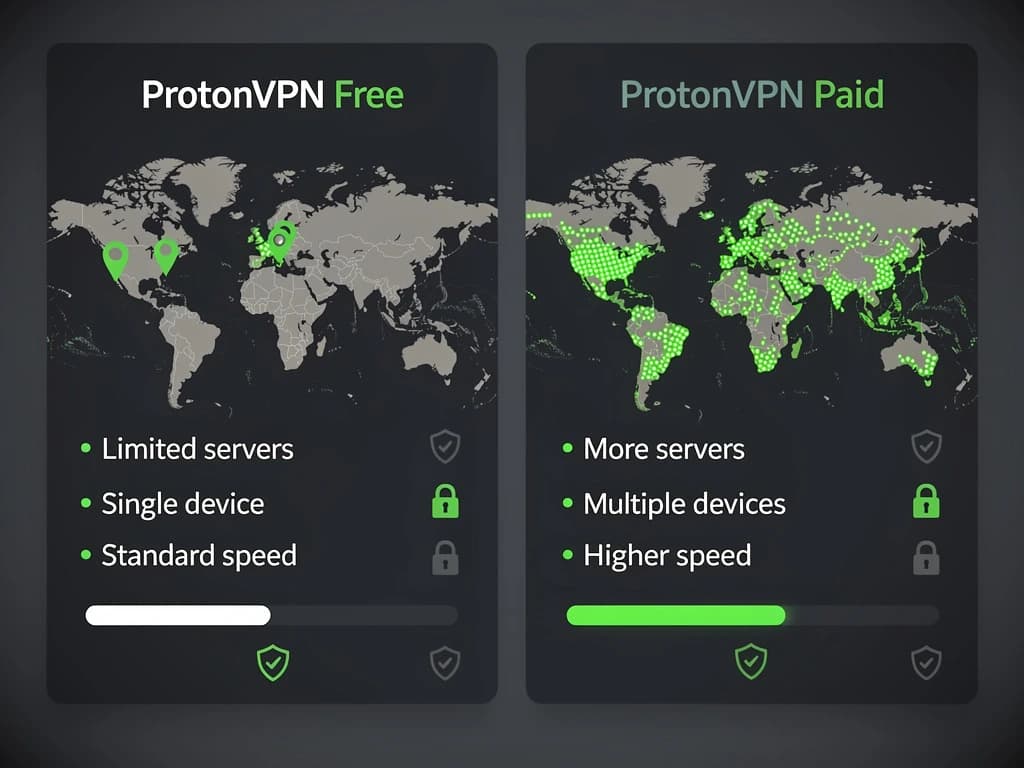
Throughput was lower than Nord's — 14–20 Mbps on the same China Mobile 5G connection — but consistent, and good enough for everything except 4K streaming. ProtonVPN's free tier doesn't include Stealth, so you need at least the Plus plan to use it. Paying $5 a month for a backup that you might use once a trip is, in our view, an obvious trade.
For full protocol notes, throughput numbers, and account-handling differences see the 30-day NordVPN vs ProtonVPN test.
Legal disclaimer
Chinese law on VPN use is narrower than the rumours. Article 6 of the Cybersecurity Law and the 2017 Ministry of Industry and Information Technology notice prohibit operating a cross-border VPN service without a licence. Personal use of a foreign VPN by a foreign visitor is not the same regulated activity, and we are not aware of any case in 2025 or 2026 of a tourist being prosecuted for it. That is not legal advice — it's an observation about enforcement patterns.
What we can say factually:
- NordVPN and ProtonVPN are foreign-operated services without a Chinese licence. Their apps are not available in the China-region Apple App Store. That is by regulatory design, not a technical accident.
- Hotel Wi-Fi and corporate networks routinely block VPN traffic. Your employer or hotel may have policies that supersede whatever the law allows.
- Sensitive periods tighten the rules. Around the annual National People's Congress sessions, party anniversaries, and major political events, the firewall is materially stricter. Plan around those windows if you can.
- Carry your own hardware. Sensitive workflows belong on a laptop you brought, not on a hotel business-centre computer or a borrowed phone.
If your trip is sensitive enough that VPN access is non-negotiable — journalists, NGO staff, anyone covering political topics — talk to a lawyer who actually practices in China before you fly. The technical guidance above is what travellers find useful in practice; it isn't a substitute for legal counsel about your specific situation.
For most readers, though — the consultant flying in for a week of meetings, the tourist who wants Instagram and Google Maps, the remote worker doing a month in Chengdu — NordVPN with NordWhisper, a backup ProtonVPN with Stealth, and a working setup before you board is what we'd take ourselves. We did, twice this spring. It worked.
— ∎ —
Was this piece worth your five minutes?
Join the conversation — sign in to leave a comment and engage with other readers.
Loading comments...