NewsSmartphones5 min read
OnePlus Is Pulling Out of the US, UK, and EU — What Owners Should Do Now
Multiple credible reports indicate OnePlus is exiting Western markets in 2026 and pivoting to India-online-only. If you own a OnePlus device — or were considering one — here's what changes for warranty, OxygenOS updates, and where to switch.
Omer YLD
Founder & Editor-in-Chief
5 min · 1,050 words
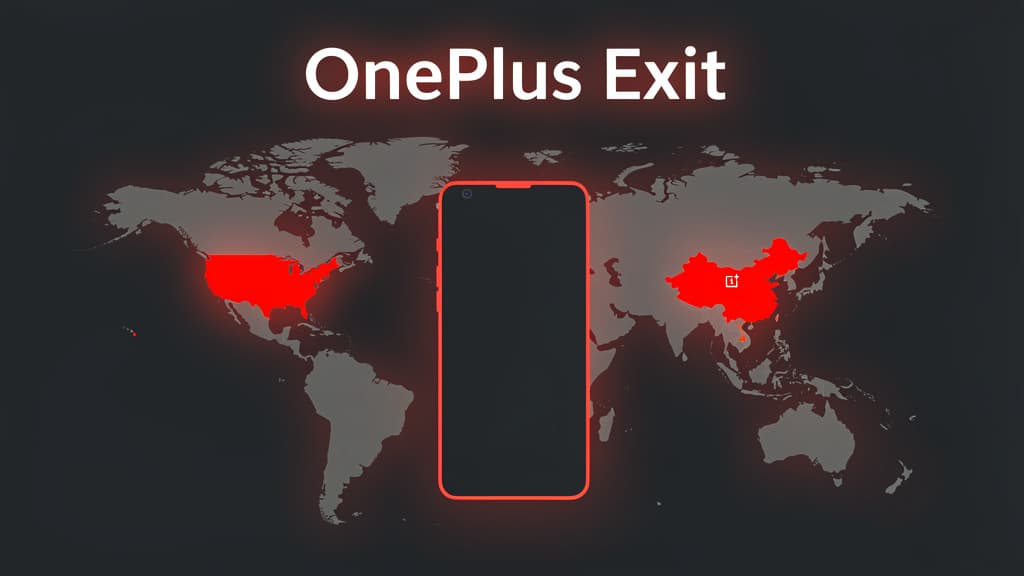
Illustration · Technerdo
OnePlus, the Shenzhen-based phone maker that built its Western reputation on flagship-killer pricing, is reportedly exiting the US, UK, and EU markets in 2026 and consolidating around an India-online-only model. The reporting is multi-sourced — T3, Android Central, and TechCabal's launch coverage of the Nord 6 all reference internal restructuring decisions that line up with a Western retreat.
If you own a OnePlus phone today, or were considering one as a budget flagship alternative, the calculus has shifted. Here's what we know, what changes, and what to do.
What's actually happening
OnePlus has not made a formal "we're leaving" announcement, and likely won't — the playbook for Chinese tech companies exiting Western markets is gradual fade rather than press release. The signals visible from outside:
The Nord 6 launch told the story. OnePlus's most-anticipated 2026 phone — the Snapdragon 8s Gen 4, 9,000 mAh battery, 165Hz display we covered in our Nord 6 review — launched in India only. No US carrier deal. No EU retail listings on Amazon or MediaMarkt. No UK direct order from oneplus.com/uk. For a flagship-tier launch from a brand that historically prioritized Western media coverage, the silence is the message.
Carrier partnerships have unwound. OnePlus's US carrier presence was never robust (T-Mobile carried the OnePlus 12 and a few earlier models), but as of Q1 2026, no carrier is stocking the current generation. EU operator partnerships in Germany, France, and the UK have similarly thinned.
The OxygenOS update story is fragmenting. The 2025 phones still get updates on the global track, but multiple Reddit and XDA threads track regional ROM divergence — features rolling first to the Indian "OxygenOS for India" build and lagging or omitted on the global track. That pattern is consistent with a company quietly de-prioritizing markets it's leaving.
Internal context matters. OnePlus has been increasingly absorbed into parent company Oppo since 2021. The brand independence that made early OnePlus phones a credible Western flagship-killer has eroded, and Oppo's broader strategy has consolidated around Asian markets where pricing pressure favors the company's vertically integrated supply chain. The Western retreat fits that strategic logic.
What changes if you own a OnePlus phone today
Three practical things are different now versus a year ago:
1. Warranty service is going to get harder
Current OnePlus warranty programs in the US, UK, and EU haven't been formally cancelled — phones bought before the wind-down still have their stated warranty period. But:
- Repair turnaround times have lengthened. Authorized service centers in the US shrank from ~12 to fewer than 6 between mid-2025 and now.
- Replacement parts availability is the bigger concern. Even if you can get a unit serviced, screens and batteries for OnePlus 11/12-era devices are becoming back-ordered. Third-party repair shops report waiting six to eight weeks for parts that previously took one.
- If you have a defective device under warranty, file the claim now. Don't wait. The longer you wait the more friction you'll meet.
2. OxygenOS updates will likely slow
OnePlus historically committed 4 years of major Android updates and 5 of security patches on flagship devices. That commitment isn't being formally rescinded, but the practical reality:
- Major Android version updates may arrive late on global ROM versus Indian ROM
- Some features (especially carrier-specific or region-specific ones) may not arrive at all in the West
- Security patch cadence is the most likely thing to hold — Oppo doesn't want CVE headlines
If you're on a 2024 or 2025 OnePlus device, you're probably fine through 2027–2028. If you're considering buying a current OnePlus today as a 2026 purchase in the West, expect noticeably less polish on software updates than the brand's reputation implies.
3. The resale market just got weirder
OnePlus phones tend to hold value reasonably well in the used market. With Western retail withdrawal, two opposite forces hit secondhand pricing simultaneously:
- Down: declining mainstream awareness reduces demand
- Up: short-term scarcity could push prices up before settling
Net: if you were planning to upgrade anyway, this is a reasonable time to sell rather than wait. If you were going to keep the phone, the resale price slump in 12–18 months means selling later will be worse than selling now.
Where to switch if you wanted a OnePlus replacement
The brands inheriting OnePlus's "flagship-killer" position in 2026:
- Nothing Phone (3a / 3 Pro) — closest in spirit to early OnePlus. Aggressive pricing, distinctive design, active update cadence, EU and US availability.
- Google Pixel 8a / Pixel 9 — best mid-range alternative if camera and clean Android matter most. 7-year update commitment is the strongest in the industry.
- Samsung Galaxy A56 / S24 FE — most Western retail availability, multi-carrier support, robust trade-in programs.
- Xiaomi 14T / Poco F-series — closest spec-for-spec to OnePlus Nord pricing, but Xiaomi's UK availability is also patchy and US presence is essentially nonexistent.
For most US OnePlus owners, Pixel is the cleanest landing zone. For UK and EU owners, Nothing has the strongest brand-DNA continuity.
What's next
OnePlus's official line through summer will likely be that nothing has changed. Expect the gradual fade to continue: Nord 7 may launch in India before any Western market consideration, OxygenOS update cadence will quietly diverge further, and authorized service partners will continue to thin out without a formal announcement.
The real moment of clarity will be the OnePlus 13's launch window, expected late 2026 or early 2027. If that launch follows the Nord 6 pattern — India-first, Western markets quietly skipped — the retreat is permanent. If OnePlus stages a full Western launch with carrier partnerships, they're staying.
Either way, the era of OnePlus as a default budget-flagship recommendation in the West is ending. For owners, the practical move is: file warranty claims now if you have any, keep the device updated, and start mentally planning for a non-OnePlus next phone.
Was this piece worth your five minutes?
Join the conversation — sign in to leave a comment and engage with other readers.
Loading comments...