NewsGaming5 min read
Steam Machine Delayed Again — RAM Shortage Pushes Price Toward $750
Valve quietly walked back the Steam Machine launch from 'early 2026' to vague 'this year' language, and the estimated price has climbed from ~$650 to ~$750. Here's what happened, why AI-driven memory scarcity is the culprit, and whether to wait or buy a Steam Deck OLED today.
Omer YLD
Founder & Editor-in-Chief
5 min · 1,000 words
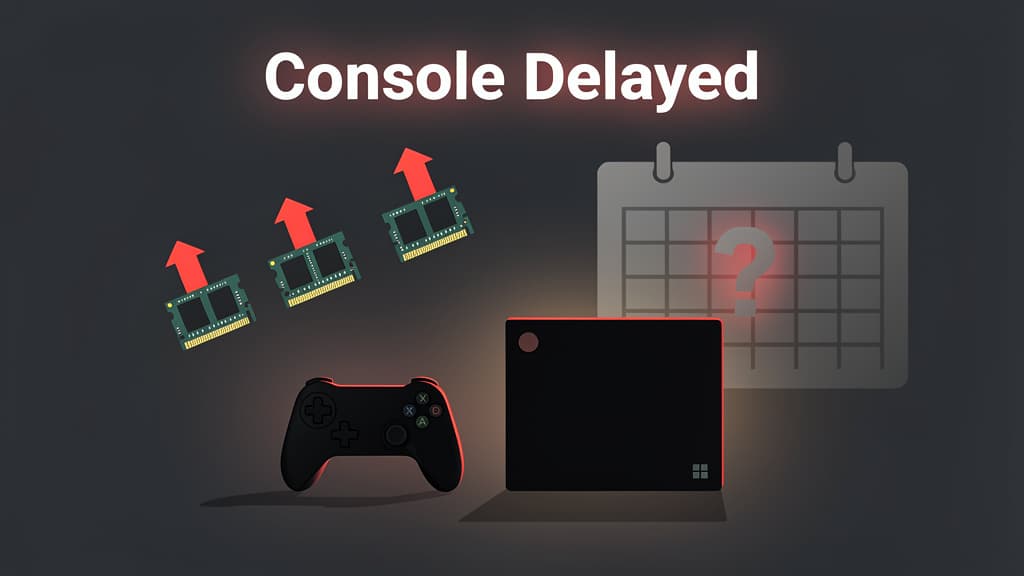
Illustration · Technerdo
Valve has quietly walked back the Steam Machine launch window — again. The official language on the Steam hardware page shifted from "early 2026" to "first half of 2026" to a deliberately vague "this year" over the past two months, with Tom's Hardware tracking the slip and reporting the AI-driven memory and storage shortage as the reason. Initial pricing estimates have climbed accordingly — from a rumored ~$650 to ~$750, per Geeky Gadgets — and the Steam Controller and Steam Frame VR headset are slipping with it.
Steam Deck OLED stock has been thin all month as a knock-on. If you've been waiting on the Steam Machine to commit to a Valve gaming-PC purchase, the math has shifted. Here's what's happening and what to do about it.
What Valve actually changed
There's been no formal "we're delaying" press release from Valve. The shifts have happened in the small text on Valve's own product pages and Steam Database listings, where the launch window quietly demotes itself every few weeks. The current state:
- Steam Machine — listed as "Coming this year". Pre-orders, originally expected to open in early 2026, have not opened. Insider chatter via Steam Database tracking points to pre-orders potentially opening in late spring with shipments pushed to June or later.
- Steam Controller — bundled in the Steam Machine ecosystem, slipping with it.
- Steam Frame VR headset — Valve's long-rumored standalone successor to the Index, also pushed.
- Steam Deck OLED — already shipping but with periodic stockouts since March, likely a downstream effect of the same supply pressure.
Valve has not commented publicly. That's consistent with how Valve handles delays generally — quiet language updates, no apology tour, ship when ready.
Why RAM is the culprit
The Steam Machine isn't being held up by chip design or driver work — it's being held up by commodity DRAM and NAND flash supply. The shortage is the most consequential second-order effect of the AI infrastructure boom that few mainstream tech consumers track day to day:
- AI training and inference demand high-bandwidth memory (HBM) at scales that didn't exist three years ago. Every NVIDIA Blackwell GPU shipped to a hyperscaler eats HBM capacity that fab lines previously could repurpose to consumer DRAM.
- Hyperscalers are forward-buying standard DDR5 too, in part as a hedge against further HBM scarcity, in part to spec the AI-adjacent server fleet.
- Consumer DRAM and SSD pricing has climbed 40–60% across 2025–early 2026 as a result, with industry analysts projecting price relief no earlier than late 2026.
Valve's bind: they spec-locked Steam Machine internals with target price points based on 2024 component pricing. Holding the original $650 target now would require either eating large per-unit losses or downgrading internals (less RAM, smaller SSD). Walking the price to $750 keeps the spec sheet intact.
What this means for you
Three different camps to think about:
If you were planning to buy the Steam Machine on launch
Hold the line, but adjust the timeline mentally to Q3–Q4 2026 and the budget to $750+. The good news is that if Valve does ship at $750, the value proposition versus a self-built equivalent SteamOS PC remains strong — plenty of small-form-factor builds at that performance class run $900+ for components alone.
If you wanted a Valve gaming device this year
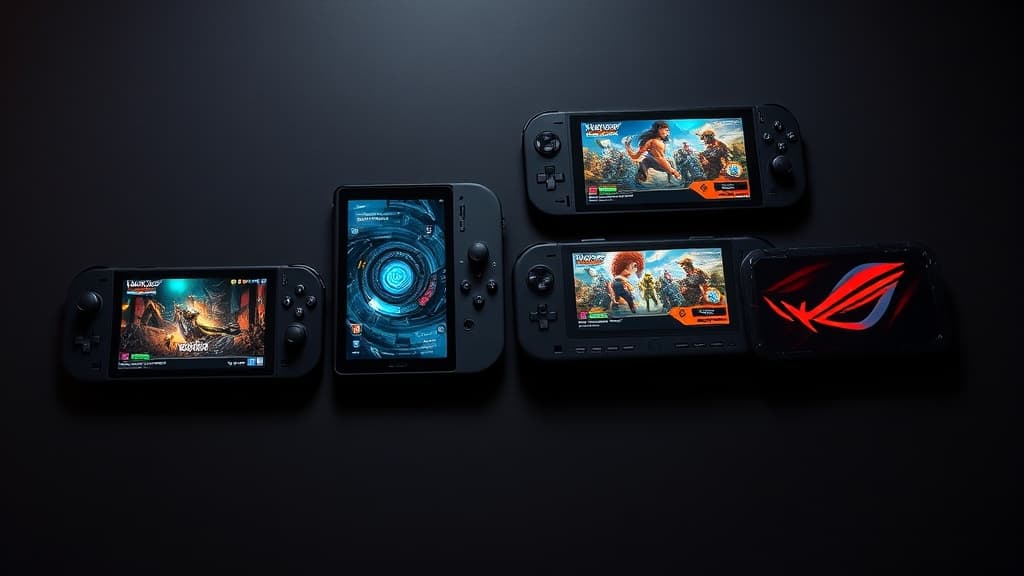
The Steam Deck OLED is the obvious pivot. At $549 (512GB), it's a known quantity, ships now (when stock holds), and the OLED panel is genuinely best-in-class for a handheld. Our current take: it's the best portable PC gaming experience under $700 in 2026. Stock has been spotty since March, but Valve has been rotating fresh batches every few weeks.
The ASUS ROG Ally X ($799) is the alternative if you want Windows compatibility and slightly higher raw performance. Less optimized for the SteamOS-first lifestyle, but better at non-Steam launchers.
If you wanted a living-room gaming-PC option specifically
A small-form-factor mini-PC running Bazzite (the community SteamOS clone) is the practical 2026 alternative. A Beelink SER8 or Minisforum UM790 with a Ryzen 7 8700G at ~$700 delivers comparable native-resolution 1080p performance to what the Steam Machine is targeting, with broader software flexibility and immediate availability.
What's next
Three things to watch:
- Pre-order open. When Valve opens pre-orders, that's the firm signal that ship dates are within ~90 days. Until then, "this year" can keep slipping.
- Memory pricing at the next major DRAM contract pricing window. If hyperscaler AI demand softens — which a few analysts are calling for in late 2026 — DRAM contract prices could ease, taking some pressure off Valve's BOM.
- Steam Controller availability. Valve has been quieter about the controller than the console, but it's the more universally appealing product (works with any Steam-running device, not just the Steam Machine). If the controller ships separately first, that's a reasonable consolation purchase.
For most buyers in 2026 who want a gaming PC under their TV: the Steam Deck OLED docked is genuinely close enough that the Steam Machine wait isn't worth holding off another six to nine months. For Valve loyalists and SteamOS purists who want a desktop-class console specifically, the wait continues — and now it's an expensive one.
Was this piece worth your five minutes?
Join the conversation — sign in to leave a comment and engage with other readers.
Loading comments...